Sage Sips is Tarot in the time it takes to sip your coffee
Think of any question that is on your mind, or think of the weekend ahead. This “Weekend Oracle” is the premier of my newest layout, TaoCraft Taijitu.
Inspired by the famous yin yang symbol, this three card layout shows yin (energies you are pulling in) yang (energies you are pushing away) and harmony (a way to be at peace and flow with all of these energies)
As usual, I read the cards right to left. This disrupts the deeply ingrained, logic-driven pattern of reading English left to right. That small cognitive shift helps to improve intuition and keep thought-habits at bay.
Of course, if your native language is Arabic, Hebrew, Chinese or other language that reads right to left, then reading Tarot left to right would make more sense.
With today’s cards we get:
Yin, The World. The World from the major arcana is a very positive, hopeful energy. It points to the big picture, the Gestalt, the everything. This is the energy you are drawing in.
Yang, Seven of Swords. This is energy that is moving away from you, or better still, energy you have been empowered to release and push away. The Seven of Swords card is associated with mischief by others and self-serving deception. In the picture a man is stealing away with swords. I intuitively ‘hear’ the old song “Steal Away” – I forget the artist, it is so old.
But in any case, there is a validating energy. You have been taken, deceived or a general victim of our collective chaotic circumstances just as much as you thought.
Harmony, The Fool. Traditionally the very first card of a RWS Tarot deck, this symbolizes fresh starts and new beginnings.
Taken as a whole, the message seems to be very hopeful: Things have been as bad as you thought, but are getting better holistically even if the changes in any one area of life seem very small. To be at peace and to help this transition along, look for any opportunity to start new .
TaoCraft Short Sip is Tarot for your day in the time it takes to sip from your coffee. Today: add power to your words with the power of silence.
Welcome to TaoCraft Tarot blog and podcast. I’m glad you are here
Today’s card is the two of disks from the Alleyman’s Tarot originally from the Serravale-Sesia Tarot.
This is a presumably public domain card from 1880s Italy. It is an interesting contrast to the better known Waite Smith Tarot and shows the difference in working with a deck that has only pips and a deck with complex narrative images on the numbered minor arcana cards.
Image cards and pip cards function the same way within a reading. Both are two paths to the exact same destination. They both take us to the message for everyone’s day, for our client or for ourselves. The emphasis shifts a little bit between the two types of cards, however.
With images, as we see in the RWS cards, there is a rich supply of detail to prompt your intuition. Despite the many prompts, all of them are thematically tied to the overall image and card meaning. Picture cards can lend themselves to a little more specificity, clarity and context.
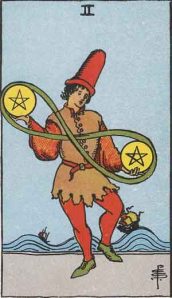
On the other hand, pip cards give your intuition free reign. Pip cards are not bound by details or images, although they retain the same general conceptual meaning as an image card. This two of disks talks about balance much the same as the RWS two of pentacles .
Coins, pentacles or disks all refer to the same suit of the deck and you will see the terms used interchangeably. I tend to say coins because that was the name used in one of my first decks and it’s an old habit by this point. Coins are associated with the element of earth and ideas about work, career and money. From a more contemporary perspective it helps to think of coins as our relationship with the physical world. The suit has a very practical down-to-earth vibe generally speaking, so it all fits.
More than the number two cards of the other suits, the two of coins symbolizes balance. Usually it’s a very dynamic balance, like a unicycle rider who constantly makes small corrections and movements in order to balance upright. The taijitu, the yin yang symbol, is another example. The black and white parts of the circle are comma shaped instead of q straight line half to show motion and a dynamic interplay of opposites.
Today, the balance is more akin to the unicycle example. The message has a subtle, nuanced quality to it. It isn’t black and white. It is dynamic and speaks to the way we move through life.
In a way, it is just how human brains are wired and how our brains deal with the onslaught of sensory input from our environment. You get used to things, and they don’t get the attention commanded when something is new or changes. It’s like a busy caretaker tuning out a chattering preschooler a little bit. The message for all of us adults is the same. If you want to be heard, if you want your words to carry power and command attention, use them sparingly. As Mahatma Ghandi said “speak only when it improves upon the silence.”
Outside of a Medieval monastery, it is hard to go through life not saying anything. Communication is essential. In our wired, cyberspace connected world, we often forget the necessity of silence. When TMI takes we are immersed in too much information the tune-out-the-toddler reflex kicks in. We become numb to the input.
It’s a balance between communication, self expression, and losing your words to the noise. Nothing makes your words more powerful than the silent spaces in between.
Thank you so much for reading and listening.
The blog and podcast are not monetized and rely on audience support. Please visit the TaoCraft Tarot page on ko-fi and consider becoming a Patron of the Tarot Arts. The proceeds from ko-fi and private readings through the blog website all contribute to the creation of this free to access Tarot content.
Diane Morgan’s Magical Tarot, Mystical Tao is for all the obvious reasons, one of my all time favorite Tarot books.
I first read Magical Tarot, Mystical Tao early in the 2000s, at the beginning in my professional Tarot career, just as I began reading for online services like Advice Trader and Allexperts. I’d been reading Tarot and oracle cards (Medicine Cards by Carson and Samms mostly) for nearly 10 years by that point. I’d been interested in Taijiquan (Tai Chi) and Taoism even longer than that.
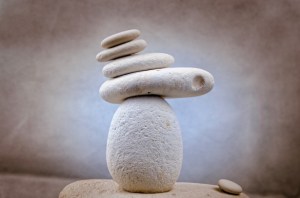
Of all the cards in the Tarot deck, the two of Pentacles / Coins is arguably the most emblematic of all that Tarot and Taoism share. We short hand the card as balance, but it is more of a juggling act than that. The balance here is large and moving and dynamic. Balance alone can be static, like a stack of zen stones, or a scales showing accurate weight.
That is balance, but there is also what science calls dynamic equilibrium. The classic example of dynamic equilibrium is a permeable membrane between two solutions. Think of fresh water and salt water divided by some sort of plastic wrap with tiny holes in it. The molecules on both sides are always vibrating and wiggling around (that is heat, so let’s imagine this is all happening at room temperature, not absolute zero. Even a polar vortex isn’t that cold.) Over time the water and salt molecules wiggle through the holes in the membrane until there is the same concentration of salt and water on both sides. Once that happens, the molecules don’t stop jiggling and juggling around. It is still room temperature, there is still heat and molecule movement going on. If you follow individual specks of salt, they may be moving the whole time, one side to the other. Same for specks of water. In spite of the little specks dancing around, the total amounts of each stay in balance on both sides. The little buggers move…it’s dynamic. The whole system, the whole tank of water, keeps its balance of salt and water concentrations…it is in equilibrium. That kind of balance is very much a part of the 2 of coins. The artwork in the card on most RWS decks hint at movement, the man walking and juggling , a woman bicycling (Steampunk Tarot) a tightrope walker (Robin Wood Tarot) even someone standing on their head (Quantum Tarot) The two of coins reminds us as much of dynamic equilibrium as a static balance. The sideways figure 8, the infinity symbol, is often used as part of the cards image to indicate that balance. It also shows us just how big the water tank is. The system that is in dynamic equilibrium is nothing less than the whole darn universe. Sure things are going to get very out of balance, if not downright wonky in our individual part of the cosmos, but infinity wide, things unfold as they should, according to their nature.
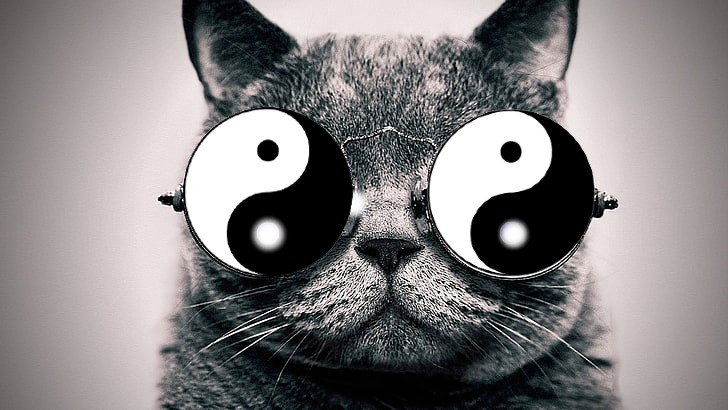
Which is all a very Taoist like way of looking at it. The Taoist point of view values that kind of big picture dynamic equilibrium. It values balance in general…static and moving…and is more than willing to consider the Tao, the everything and then some, in finding that natural moving balance. Harmony of opposites is another, easier way to put it. The well known yin yang symbol that is emblematic of the philosophy is actually intended to be in motion. The dots are the seeds that grow into their opposite. If you look just at the yin or yang, the black or white, each part is always growing, shrinking, turning. Yet, within the circle as a whole, even among all that movement, there ends up being balanced, equal amounts of black and white, yin and yang.
That is the energy flow the two of coins can help us to find. The two is always about balance. Is it static or dynamic? What kind of balance do we need? Are we looking at one little jiggly speck of salt in the water and feeling out of balance? Would it help to look for larger, moving systems when we look for balance in out lives or would it help to look for the little but very stable balance points like stacking Zen rocks? How do you know? The balance is of opposites, remember? The dots are the clue. In each lies the seed of its opposite. If you have been focusing on static stable balance, but it isn’t working, take a step back and look at the big picture, moving systemic balance. If the system seems chaos and everything is flying apart…look for anchors. Look for the solid, stable, static parts on which to build some balance.
Stones and yin yang images from the public domain. Jimmy Neutron property of Nickelodeon via youtube.com.




 Sage Sips / TaoCraft Tarot
You must be logged in to post a comment.