
Bound by tradition
Enriched by community
Free to find your path
Sage Snow
Taroku is Tarot inspired haiku for National Poetry Writing Month.
Private readings, memberships and virtual coffee on ko-fi support this always-free-to-read Tarot blog.

Sage Sips is Tarot in the time it takes to sip your coffee (or tea, or smoothie, or adult beverage, or whatever you sip this time of day.
Bound by tradition
Enriched by community
Free to find your path
Sage Snow
Taroku is Tarot inspired haiku for National Poetry Writing Month.
Private readings, memberships and virtual coffee on ko-fi support this always-free-to-read Tarot blog.
TaoCraft Short Sip is Tarot contemplation for your day in the time it takes to sip from your coffee

Hello and welcome to Tao Craft Tarot blog and podcast
Today’s card is unique to the Alleyman’s Tarot and was created by Seven Dane Asmund for the deck.
I connect the card to the High Priest as it is portrayed by Dugan & Evans in the Witches Tarot. It also brings to mind lovely artist and Tarot reader Johanne Denelli. She first helped me see the Pope / Hierophant / High Priest card as anything other than a pure nemesis (because of its strong religious portrayal in early decks like the Marseille and Waite Smith decks.)
I think the non-dogmatic, keeper of culture, kindly teacher, teller of stories around the campfire aspect is what the artist intended for the Tradition card.
Today, however, the card also brings to mind the silent meditation protests of Buddhist monks in Myanmar and other countries over the years.
Traditional does not equate with blind adherence and eternal sameness.
Human beings who grow, learn, evolve, and change is in itself a tradition of sorts.
A tradition of compassion and justice can spark revolution when hate and injustice flourishes. In that context, tradition is to be honored and can be the seed of revolution.
But what if your given history and tradition is the one causing the injustice? How do you honor your traditions and ancestors when your ancestors were a herd of jackasses?
In that way too, tradition carries the seed of revolution when it becomes the spark for opposition and becomes a call to action as something to be ended or at least profoundly changed.
Today the Tradition card is asking us to use our traditions to take us to a place of compassion. It can become a connection with our fellow humans and our core humanity either by honoring our traditions or abandoning them, whichever path is the right one for the individual.
Thank you for reading and listening. I always appreciate your support through likes, follows, shares, questions and comments.
If you enjoy the blog or podcast, please visit the TaoCraft Tarot page on ko-fil to support their creation and production. Private email readings ordered through the blog website also helps to produce this Tarot content for everyone.
Thank you again. See you at the next sip!
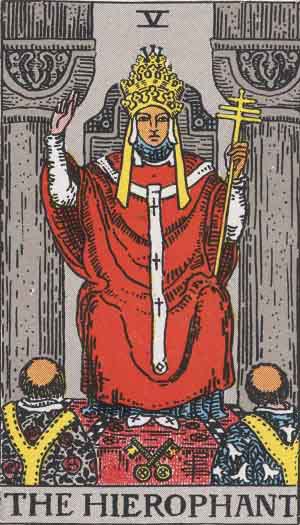
Today’s Card is the Hierophant. Some decks call it the Pope or the High Priest.
One of my favorite interpretations for this card is a grandfather figure, the keeper of family stories and tribal histories. The past couple of years have been crazy. Don’t feel bad if you seek comfort in a more traditional holiday season, old routines or some sort of spiritual ritual. It can be comforting.
The card brings the movie Cloud Atlas to mind. There are scenes of an old man telling stories around a campfire. On one hand it is an ancient image, but we find out through the course of the movie it is actually happening in the distant future.
There are threads of time together in language, story, tradition. They are kept alive through adding, adapting…the same as living species adapt and survive. There is deep comfort in old ways, even as they are adapted to our needs living here in the future.
Thank you so much for reading, watching and listening to these new TaoCraft Short Sip Tarot readings. These are (almost) daily short format Tarot readings to give guidance to your day in the time it takes to sip from your morning coffee. Longer Clairvoyant Confessional episodes will be coming, but not in any regularly scheduled way, at least for the time being. If you have a question for the Clairvoyant, please send it to the contact in the podcast episode description or leave it in the comments. Don’t forget to like, follow, subscribe share and do all of those wonderful things that you do. All best wishes to everyone. See you in tomorrow’s TaoCraft Short Sip Tarot.
Ritual and tradition can be either prison or sanctuary, shackles for the mind or tools of freedom. Follow the tradition your inner wisdom shows to be the right way for you.
Left: Justice. Take everything into consideration, but also take your place at the table. Give and demand respect in equal measure. A day to choose your battles, choose your words carefully for maximum impact.
Middle: The High Priest. Wisdom and experience can be used to forge new paths. A good day to explore new things if you have backup information. Don’t be afraid to “phone a friend” for advice.
Right: The Hanged Man. The upside is that well timed actions can have maximum benifits with minjmal effort. The downside is that you never gave any control over the timing. You can’t control how fast things unfold so just stay frosty, be patient, and watch for your opportunity, even when it a long time in the making.

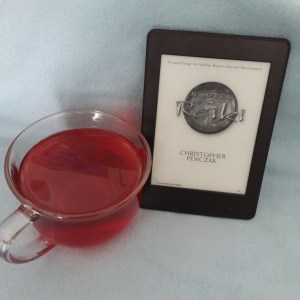
I love a good book and a cup of coffee (or Red Zinger tea as it was when I took the picture)
This past weekend I finished Magick of Reiki: Focused Energy for Healing, Ritual, and Spiritual Development by Christopher Penczak. It is a absolute must-read for Reiki practitioners in America, possibly everywhere else, too.
I originally picked up the book to learn more about the magick piece of it. Full disclosure, I began to study Reiki back in the late 1990s, and was attuned as a Master-practitioner in the Usui style in 2000. Reiki was the topic my Ph.D. thesis in 2011. Reiki is my jam, I use it all the time for myself and my family. For various reasons, it hasn’t been until lately that I’ve started to connect the dots between the Asian culture influences (Taoism, Zen, Meditation, Reiki) and the European cultural influences (Tarot, Magick, aromatherapy, crystals) within my overall energy work.
To put it in a food analogy, I was expecting to try a new dish, but instead got a big old bowl of really delicious and familiar comfort food.
My expectations were backwards. Rather than being a book about a Magickal practice that incorporates Reiki, this is a book about Reiki by a Reiki teacher that points out the ways that Reiki is similar to magick. Instead of a book nudging the limits of my magickal knowledge, I found a book that was, after all, right in my wheelhouse. Delightfully so.
Mr. Penczak’s description of Reiki is right on the mark in my experience. I respect the he way he approaches all the varied schools in Reiki. He deals insightfully and compassionately with some fairly hot button issues between them.
His attitudes toward a wide variety of topics within Reiki very much resonate with my own. His thoughts on extended symbols, individually given symbols, publishing symbols, Reiki guides, the use of intuition within Reiki practice and most of all the giant bugaboos about money and charging for lessons and treatments are all kind, wise and just exactly what the American Reiki landscape needs. For magick topics and learning, I plan to read his other books. Magick of Reiki may not be the best choice for beginner magick reading, but it is perfect for next-step Reiki reading.
This is a book for people who have had a taste of Reiki and are looking for a fuller, more empowered approach to their practice. I cannot recommend it highly enough for anyone who has had any sort of Reiki attunement or training. This is next step elevation of existing Reiki practice through review of the basics and an overview of important advanced concepts.
It seems to me that the best non-fiction writing gives some nugget, some bit of wisdom that transcends its literal topic. The same is true here. Whenever similar ideas come from sources separated in place, time or specialty, it gives that idea a real gravitas. One might shy away from calling anything ultimate ‘truth’ but similar ideas from dissimilar sources makes any notion important to my mind.
Mr. Penczak emphasizes following one’s own intuition and feeling in incorporating different Reiki practices into our own, both generally and session by session as needed. Joanna DeVoe describes herself as a “spiritual magpie” following the same self-direction for her spiritual practices writ large, magick or otherwise. Benebell Wen, in Holistic Tarot, connects the universal life energy (the ‘ki’ in Reiki, the “chi” in Tai Chi) to the ability to do Tarot readings at a distance. Scott Cunningham, in Wicca for the Solitary Practitioner, reminds us that “the feeling is the power.” Adam Savage, writing in Every Tool’s a Hammer hints at the same autonomy and independence of thought within the realm of creativity and making. Mr. Savage captures the core of it when he quotes Ralph Waldo Emerson “To believe your own thought, to believe that what is true for you in your private heart is true for all men – that is genius.”
Genius, as every superhero movies teaches us, can, however, go wrong. To believe your inner heart is genius. To to have an inkling that it can be useful to everyone is generous. To believe that the totality of your path is the one singular right way for everyone is arrogance.
That isn’t to say all singular traditions are arrogant or wrong. The wrongness comes in assuming that one specific tradition is the one true way for everyone be it within Reiki or Magick or making stuff. If there is a particular tradition or path that is right in its totality for you, by all means follow it. You must fo what you know to be right for you be that stick with a particular school or be that follow your inner heart.
There is common ground between the group and the individual.
Tradition is tradition. Method is method. Making your own way is a tradition and a method of its own. Magick of Reiki hints that using the best of what we know gleaned from all the varied schools of Reiki IS the tradition of Reiki just like Cunningham hints that the feeling of power IS the power within magickal practice. This notion seems at diametric odds to adherence to prescribed old ways. Think about trust. Trust runs deeply through both approaches. Trust is the tradition.
In order to follow one particular school of thought within Reiki (or anything else) it require trust of that tradition. It requires trust in the originators and the transmitters of the tradition. If you are on a more inner (read solitary) path, it requires a great deal of trust too….trust in your perceptions and in your ability to adapt as better information comes along. In practice, it is a yin-yang dynamic combination of both. If you follow a tradition, you have to trust your inner knowing to choose the right tradition out of the many that exist. It requires extroidinary trust in your inner heart to change traditions and personal practices if needs be. If you are solitary, you have to trust the outer sources of information that you in turn adopt and adapt.
Usui, Tibetan, Johrei, Karuna, Shamballa; whether you follow one tradition or draw from them all and more, trust is the tradition behind it all.
Other Bookshelf posts:
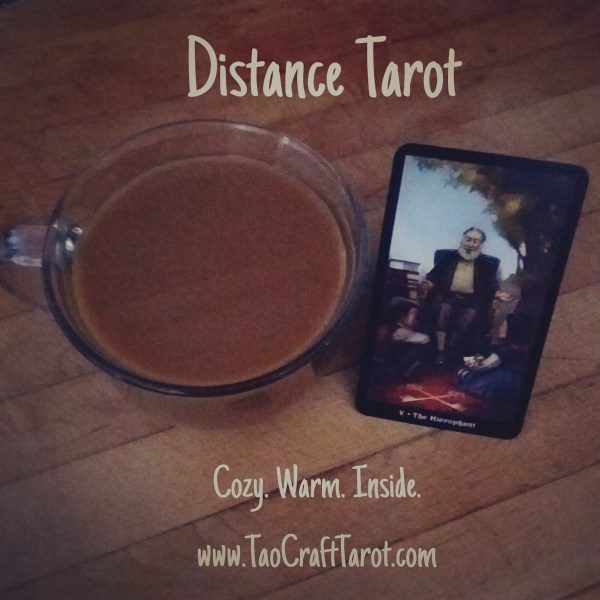
Some cards come more naturally than others.
Tarot readers are people too, and have our emotional triggers. Some cards push our buttons more than others. Giving a reading touches our hearts and minds as much as getting a reading. The Hierophant card is a challenge for me when it is drawn in full pointy hat christian-heavy regalia. Just not my wavelength. Fairly or not, my life experience and point of view made the RWS Pope look wrapped in rules and judgement. Until – thank you social media – I read a framework for the card that made sense out of it. At the same time I found decks with artwork that fit the new conceptual fit. In short order, the dogmatic, pedantic pope-ish character morphed into a Grandpa.
Think stories by a campfire. Think shamen. Think wise elder. Think teacher. Think Yoda.
Whichever deck we use, when the Hierophant comes into a reading for a client, intuitively, it seems to take one of those two tracks, whichever best suits the client’s needs I assume. It either vibes with rules or traditions.
On one hand, it seems to have to do with social conformity, playing by the rules. It is compliance with a Papal Edict. Or, it could have to do with nonconformity, breaking social convention, rejecting other people’s expectations. It seems like the sense of it doesn’t follow whether the card is reversed or not. It seems more triggered by the clients nature. If the client is a natural conformist, then it seems to nudge toward being their own person, pushes them a bit toward freer thinking. If, on the other hand, the client is naturally a freethinker, or a rule-bender, then it may be a nudge to “play by the rules” a little more in some respect.
Now that the ‘keeper and teacher of traditions’ notion has crossed my path, it comes through at times even if I happen to be using the RWS deck. It seems to come through with that energy at times when the client is feeling a little uprooted, or disconnected, emotionally or spiritually orphaned somehow. When this is the energy, the Hierophant is a call to join the circle, learn of the past, learn of roots and connections. Just as we are each our own best minister or pope, we are at times our own hierophant, finding and adopting our own spiritual tradition on a path apart from our past or upbringing. Either way, it is about learning a new pattern.
It is a pattern of twos, of balance, in understanding the Hierophant. Comply with rules or find your own path. Embrace or rediscover your tribe and deep traditions or celebrate your initiation into a tribe of one. Either way, the Hierophant is teaching us our path and spiritual tradition.
 Sage Sips / TaoCraft Tarot
You must be logged in to post a comment.