“What is in a name? That which we call a rose by any other name would smell as sweet”
William Shakespeare, Romeo and Juliet
“What I told you was true, from a certain point of view” – Obi Wan Kenobi
Obi Wan nailed it. Sorry Bill.
Names, labels, adjectives, the power of words; all of those things have niggled at me off and on over the years. The niggling about names hasn’t stopped since we talked about it the other day in the “What is in a Name” post. That was a first step away from Shakespeare’s literalness about flowers. Let’s take it one step more.
Shakespeare was right, of course, in the most literal sense. You could name that particular fragrant flower a “rose” or a “gagglystank” or anything else, and the literal flower would still have the same chemicals causing the same fragrance, the same petals, the same stems, the same thorns and all the same physical attributes.
But, like business and website names, any name has more to it than just literal, physical descriptions. Names, like all of language, is about communication. If I say “rose” and you speak English, you know exactly what I mean. Not just a flower, but a particular type of flower with a particular set of physical attributes. You can probably imagine the scent, the petals, the stems, everything about them. If I say “gagglystank” to you, chances are you will have no idea what it means much less have a physical description come to mind. Gagglystank is a word that tells you a little about my feeling about the scent of roses, but is definitely not the NAME of anything. There is power in a name. Communication happens when things have a name. Communication conquers time and space. That is why “branding”….naming….matters. It is outward communication. A name is immediate, instant communication of what a thing is. TaoCraft Tarot is hint about what I do and my way of doing it.
Shakespeare’s roses (in addition to being a great idea for a band name) is about the literal, unchanging being of objects no matter what words are projected onto them. Names are more than the literal objects. Names are also about every intangible thing the tangible object symbolizes. Outward communication is one step away from the actual things. One more step takes us inward. Consider the psychology and emotional response to a rose.
If we called roses gagglystanks instead, would they really smell as sweet? What emotions and connotations would a different name elicit? I’m not fond of rose scent or anything too cloying or floral. Gagglystank is a perfectly good word to tell you how I feel about the way those specific flowers smell. But it can’t be the name of the thing, because it doesn’t communicate to you. It isn’t a meaning our language has agreed to use. It doesn’t capture the visual beauty. It doesn’t capture the emotional response to the flower generated by generations of love-symbolism our culture has connected to that flower. When we see or hear the name “rose” all at once we understand the literal thing, the things the symbolizes, and likely experience a positive emotional feeling to go along with it all.
First you have a thing. Then you have a name-word for the thing. Then you have all the abstract things that go with the literal thing, all wound up in an emotional response to the whole word-name-symbolism package. Names means a lot.
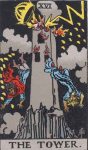
This second-step away from Shakespeare’s roses is the place where Tarot cards get their power. The cards have powerful images. The cards use powerful words. They prompt us to take that next step beyond literal things and outward communication in order to get right to the realm of symbolism, emotional connotations and, most importantly, inner response. The Tower comes to mind. Set aside the lighting and other images, lets talk about just the Tower alone for a minute. First you have a literal picture of a literal tall thing. You name it Tower, and without the picture, a Tarot reader can convey instant understanding of both the thing and the image. If I say “tower” then you know I’m talking about a big tall skinny outdoor object or part of a building. Then you bring in all the connotations of a tower: tallness, a higher perspective, potential isolation. The inner FEELING of the reader guides the seeker to the right connotation and symbolism, even when reader and seeker are the same person. The process of inward symbolic communication…the second step away from Shakespeare’s roses…is where a Tarot reading really happens. This kind of word and name driven inward communication is the same no matter if you are reading for yourself or someone else, nearby or at a distance.
The thing, the name of the thing, along with the symbolism, connotations, and emotions that the name carries are all part of intuitive communication. Names speak both outwardly and inwardly.
There is power attached to a name. That power can attach to any name for any thing in any language, but not every name carries that level of potency. Roses by other names may not smell as sweet except in the literal sense. Roses by their true name have a complex fragrance…from a certain point of view.
 Sage Sips / TaoCraft Tarot
You must be logged in to post a comment.