May the 4th be with you – because the force already is

no need to wish that the force be with you – because it already is.

Reiki has crossed my path lately.

That’s not entirely accurate. Reiki IS my path. Or at least a good chunk of it. Or one thread of the braid of it. It’s hard to describe. So let’s back up a few years.

I’ve been told that it is good to re-introduce yourself every now and then. Let me reintroduce you to the Reiki side of Tao Craft.

You know the Tarot part well, even if you have been following along just a short time. Ebooks and mala style meditation beads part of things are pretty self-explanatory for sale ko-fi shop and Etsy shop respectively.

It may seem a little odd to have Tarot and Reiki living in the same cyber space. Reiki and Tarot are actually connected at a fundamental level. The Venn diagrams of Reiki, Tarot and magick overlap so much as to practically be a circle.

It might not make sense at first glance. I mean, sure, Tarot is so associated with all the various forms of magick and witches that it is pretty much assumed that if you read Tarot you are a witch and vice versa. But Reiki? What does Buddhism influenced love, light, and lotus flowers have to do with Tarot and magick craft?

As the name TaoCraft implies, it has a lot to do with it. Whether you use eastern or western terminology, Taoism and Tarot, Magick and Reiki all spring from the same basic substrate of universal energies.

As a quick explanation in terminology, Reiki specifically means a method of energy wellness developed in the 1920s by Micheo Usui of Japan. Other methods of energy healing have come to be called Reiki just like the brand name band-aid has come to be used interchangeably with any adhesive bandage. Some newer energy systems identify as being derived from Usui’s work and so identify as a type of Reiki like (if memory serves) Karuna Reiki and the like. Other energy styles and systems may have started with Reiki but split off to differentiate themselves entirely from the traditional Usui system and take on wholly different names. That can happen on an individual or organizational level and doesn’t imply that the system is any better or worse than Reiki, just that it is a different thing all together. In addition to that you have other energy systems that have always been separate and distinct from Reiki since their inception. As I understand it, Johrei is a similar but religious Japanese discipline that grew in parallel to Reiki during the 20th century.

To be clear, whenever I say Reiki (pronounced “ray key”) I specifically mean the Usui system. I use “energy healing” or “energy wellness” as an umbrella term for all similar healing and wellness practices.

My training and certification is in the Traditional Usui style. I studied first and second level training with Karon Mellon of Sewickley PA in the mid 1990s then repeated these levels and progressed to the master-practitioner level under Master Thom Beardshall of McMurray Pennsylvania in 2000.

I don’t feel particularly drawn to teaching Reiki outside of writing about it. I’m a practitioner and, like Tarot, my strong suit is distance work. For the past four years since the TaoCraft Tarot rebranding, I’ve been focusing on distance Reiki and developing what I call “Sending Stones” distance Reiki sessions. I do call it Reiki because it is a Usui method distance session in accordance with my training BUT with the added embellishment of holding a selected stone or crystal to enhance the ambiance and enjoyment of the session. This is no different than the way many Usui practitioners embellish in-person sessions with music, incense, candles or aromatherapy.

There is so much more to say about Reiki. Far more than any one blog post can cover. So I’ll give you a little homework instead.

To see what the Reiki part of TaoCraft looks like, just click the Reiki tab at the top of the page on the blog, or in the menu if you are viewing the website on a mobile device. There are lots of updates planned, so I hope you’ll follow the blog or podcast to hear about those as they happen.

Based on all I’ve learned over the years plus my personal experience learning Reiki, I am firmly in the camp that says the only way to learn in person and over time. Humans don’t flip switches. It’s not like installing the latest update to you phone’s operating system. Human physiology and psychology takes a little time to fully integrate to a new outlook. It takes time to fully incorporate and keep new energies and new thought habits and new habit-habits. Our eyes are not our only sense. You need to have the tactile experience of feeling energy and the change in your hands. The attunement … I’ll call it a ritual for lack of a better word…is a powerful initiation that must be experienced first hand.

Common wisdom teaches us that low, slow burning fires last the longest. That isn’t to say that doing all three levels of Reiki training in one weekend will cause them to flame out and go away. There is, however, a difference in quality. To put it in culinary terms, it’s like the difference between a cheap fast food hamburger and a slow smoked brisket. It’s like the difference between warming up a can of beans and pot of authentic New Orleans red beans that have been bubbling away in a slow cooker all day. Once attuned always attuned seems true. Achieving an enduring high quality experience of Reiki in your life (whether you treat others or not) needs a sweet spot of time between level attunements. The goldilocks zone of time between attunements seems to be 7 to 21 day. It’s enough to adapt and embrace and use and live your new energy level from the last attunement, but no so much time that your attention fades and you start to lose readiness for the next attunement.

But that’s just me. Like Tarot readers and Magick practitioners, there are as many schools of thought about it as there are people living it.

That being said, I don’t encourage anyone to learn Reiki in a single weekend or solely from books or videos. The makers of the world will understand this part: Sometimes you just have to get your hands on it and DO something to really, really understand. That is even more true for something like Reiki that you don’t just know, that you don’t just DO, but can become a way of life.

Doing and living implies continuation, movement and change. Just like science and mainstream medicine, there is always something to explore, improve and learn in Reiki too. That’s where books come in.

Back in the day, when I was studying for my Doctor Doofenschmirtz style remote learning Ph.D. with Clayton College of Natural Health, Reiki: Universal Life Energy by Bodo Baginski was the first book they assigned for the energy medicine class. It is a classic and a good read if for no other reason than Bodo Baginski is probably one of the coolest, most Hobbit like author’s names I’ve ever seen.

After that, I suggest anything and everything by Walter Lubeck and Frank Arjava Petter, especially as one moves from second level to master or master-practitioner levels. Once you have a basic understanding and basic attunements these books increase your level of proficiency. Reiki Fire and Petter’s books are particularly important for those who come into Reiki under the Takada lineage and who are very invested in the Christianized version of Reiki History. While this version was utterly necessary in its time, and may well be the only thing that preserved Reiki in a time of great bigotry and the internment of Japanese American citizens, it is equally important for we 21st century practitioners to know and understand Reiki’s actual, documented, Buddhist roots.

Christopher Penczak’s Magick of Reiki from 2004 is number one on my personal list of must-read Reiki books, but only if you have an established foundation in Reiki, magick, or both. While it is an engaging, absorbing, clear, easy to understand read, the real heart of the subject matter is a bit esoteric. I didn’t discover the book until fairly recently, so I’ve only engaged with it from an experienced practitioner’s point of view. Even after all these years, I gained much from it, especially on the magick side of the equation where my experience and learning is less.

His explanation of physical versus spiritual Reiki is a crucial utterly essential understanding for any Reiki practitioner, especially here in America. I urge anyone interested in Reiki to read this book if for nothing else but the page explaining this important concept.

Count me on the spiritual side. My dissertation argues that Reiki does indeed have physical benefit BUT through the mechanism of the mind-body connection and through mitigation of the detrimental effects of psychological stress. When Reiki improves stress it improves all the physical things that the stress was making worse. Reiki does have physical benefit, but not in the mainstream allopathic mind set of ‘do this to fix that’. Reiki works in the holistic model of improving total functioning and wellness, not just ameliorating a single symptom or isolated disease process. Reiki shifts the mind part of mind-body wellness from a detrimental stress mode into either a neutral or supportive role, in essence getting stress out of the way so that the body’s natural healing abilities can function at their best. If you are interested in the statistics and references, Reiki and Relaxation is the ebook friendly pdf version of my dissertation.

Having a clear idea of the kind of Reiki you want to practice improves your practice.

Again, I work from a spiritual/emotional healing point of view with my Reiki practice. In the beginning, because of my medical background, I tried to work from the physical model and bring Reiki into the mainstream.

It doesn’t work. You wind up whittling away so much of Reiki in order to fit that square peg into an unyielding juggernaut of a round hole that after a while it does a disservice to both the client and to the practice of Reiki writ large…

to be continued

Gift of a Lifetime Wrapped in a Pen

Ink Reading Glass pen


Sallie Christensen, one of the most skilled and gifted psychics I’ve ever met, once told me that “A thought is powerful, the spoken word is more so, but the written word is the most powerful of all.” That one sentence was a gift of a lifetime wrapped in a pen. In essence, she had handed me a magic wand.

I had that reading with her in the early 1990s, roughly around the time I’d started exploring oracle cards with Tarot soon to follow. That adage has proven true time and again in the decades since.

Journal writing is a powerful thing. I suspect those years of journaling is the reason why I can communicate messages from spirit as easily through pen and keyboard as through speaking. Written Tarot is definitely more sophisticated, since live sessions don’t have edit buttons or grammar check. Speech may transmit ideas quickly, but writing is a superconductor. Hearing is here and now. Even recordings have a sense of immediacy. Writing transcends space and time. It’s the closest thing we have to telepathy. When I write something and you read it, the message from spirit is communicated heart to heart and mind to mind with none of the mechanics of speech or hearing in between. Hearing happens at Mach 1, the speed of sound. Reading happens at the speed of light.

As Carl Sagan wrote:

“A book is made from a tree. It is an assemblage of flat, flexible parts (still called “leaves”) imprinted with dark pigmented squiggles. One glance at it and you hear the voice of another person, perhaps someone dead for thousands of years. Across the millennia, the author is speaking, clearly and silently, inside your head, directly to you. Writing is perhaps the greatest of human inventions, binding together people, citizens of distant epochs, who never knew one another. Books break the shackles of time ― proof that humans can work magic.”

Written Tarot is potent to both give and receive. The experience of reading something that resonates with you spiritually is very similar to the experience getting an intuitive message directly from spirit. Reading anything that is spiritually resonant, be it books, letters, Tarot cards, blogs or emails, is a breathless melange of emotion, empowerment, and enlightenment. Many books have been like that for me, Ted Andrews’ and Christopher Penczak’s in particular. Perhaps written Tarot can capture some of that experience for you.

Intuition happens inside of your head and heart. It is an entirely subjective experience. For me, the internal process of writing is more closely aligned to the internal intuitive message itself.  The flow from spirit to written language is immediate and effortless, while putting things into spoken words takes the tiniest bit more thought and effort. In wireless terms, spoken words work at 4G while my writing operates at 5G or above.

How you enjoy taking in the words and messages of a session is another story. If you like to read, written Tarot is as comfortable as breathing. It doesn’t matter if the actual thing you read is a computer screen or a piece of paper. The experience of reading your message is equally intense regardless of media.

In-person Tarot readings are wonderful, mind expanding, heart warming, and sometimes life changing things…just like the session I had with Sally when we talked about journal writing.

An email or handwritten paper Tarot session is its own kind of mind expanding, heart warming and life changing  experience … just like reading the Andrews and Penczak books.

All of that being said, I’m hoping this will let you feel confident in ordering Distance Tarot. While this post is a glimpse to the writing process on my side of the table, the message is the same no matter how you prefer to receive it, written or spoken, email or live. It’s just a matter of deciding which experience resonates with you.


This one is for all of the book lovers. I’m working on a second edition of PeaceTarot. Both editions teach you how to do DIY daily Tarot meditations even if you don’t have a Tarot deck on hand. The second edition adds expanded, pandemic-era card meanings for all 78 RWS Tarot cards.. During the caronapocolypse, we have all been making do with stuff on hand. As life “re-opens” I hope we can carry a little bit of that ingenuity with us. In the spirit of that resourcefulness, I want to upcycle some second quality paper copies* of PeaceTarot and hand customize one just for you. I’ll write a one card reading just like the kind of readings the book can teach you to do PLUS include a sigil element (or sigil glyph or psych-a-doodle or whatever you want to call it) crystal energy and aromatherapy suggestions, an affirmation, add whatever else comes to mind AND use my favorite schmancy glass dip pen. There are a limited number available. All you really pay for is postage and handling. The “graffiti edition” PeaceTarot with custom handwritten one card Tarot readings are available in the shop HERE.

*First edition, single side print, side staple bound

Just a quick reminder: Distance Tarot is always OPEN, with phone readings by appointment. Even though our area is partially out of lockdown and starting to re-open for retail business, in-person individual and party readings will remain closed until a COVID-19 vaccine becomes available.

Related post: The Power Grows.


Bookshelf: Magick of Reiki

20190201_093300.jpg

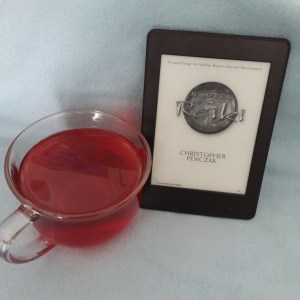
I love a good book and a cup of coffee (or Red Zinger tea as it was when I took the picture)

This past weekend I finished Magick of Reiki: Focused Energy for Healing, Ritual, and Spiritual Development by Christopher Penczak. It is a absolute must-read for Reiki practitioners in America, possibly everywhere else, too.

I originally picked up the book to learn more about the magick piece of it. Full disclosure, I began to study Reiki back in the late 1990s, and was attuned as a Master-practitioner in the Usui style in 2000. Reiki was the topic my Ph.D. thesis in 2011. Reiki is my jam, I use it all the time for myself and my family. For various reasons, it hasn’t been until lately that I’ve started to connect the dots between the Asian culture influences (Taoism, Zen, Meditation, Reiki) and the European cultural influences (Tarot, Magick, aromatherapy, crystals) within my overall energy work.

To put it in a food analogy, I was expecting to try a new dish, but instead got a big old bowl of really delicious and familiar comfort food.

My expectations were backwards. Rather than being a book about a Magickal practice that incorporates Reiki, this is a book about Reiki by a Reiki teacher that points out the ways that Reiki is similar to magick. Instead of a book nudging the limits of my magickal knowledge, I found a book that was, after all, right in my wheelhouse. Delightfully so.

Mr. Penczak’s description of Reiki is right on the mark in my experience. I respect the he way he approaches all the varied schools in Reiki. He deals insightfully and compassionately with some fairly hot button issues between them.

His attitudes toward a wide variety of topics within Reiki very much resonate with my own. His thoughts on extended symbols, individually given symbols, publishing symbols, Reiki guides, the use of intuition within Reiki practice and most of all the giant bugaboos about money and charging for lessons and treatments are all kind, wise and just exactly what the American Reiki landscape needs. For magick topics and learning, I plan to read his other books. Magick of Reiki may not be the best choice for beginner magick reading, but it is perfect for next-step Reiki reading.

This is a book for people who have had a taste of Reiki and are looking for a fuller, more empowered approach to their practice. I cannot recommend it highly enough for anyone who has had any sort of Reiki attunement or training. This is next step elevation of existing Reiki practice through review of the basics and an overview of important advanced concepts.

It seems to me that the best non-fiction writing gives some nugget, some bit of wisdom that transcends its literal topic. The same is true here. Whenever similar ideas come from sources separated in place, time or specialty, it gives that idea a real gravitas. One might shy away from calling anything ultimate ‘truth’ but similar ideas from dissimilar sources makes any notion important to my mind.

Mr. Penczak emphasizes following one’s own intuition and feeling in incorporating different Reiki practices into our own, both generally and session by session as needed. Joanna DeVoe describes herself as a “spiritual magpie” following the same self-direction for her spiritual practices writ large, magick or otherwise. Benebell Wen, in Holistic Tarot, connects the universal life energy (the ‘ki’ in Reiki, the “chi” in Tai Chi) to the ability to do Tarot readings at a distance. Scott Cunningham, in Wicca for the Solitary Practitioner, reminds us that “the feeling is the power.” Adam Savage, writing in Every Tool’s a Hammer hints at the same autonomy and independence of thought within the realm of creativity and making. Mr. Savage captures the core of it when he quotes Ralph Waldo Emerson “To believe your own thought, to believe that what is true for you in your private heart is true for all men – that is genius.”

Genius, as every superhero movies teaches us, can, however, go wrong. To believe your inner heart is genius. To to have an inkling that it can be useful to everyone is generous. To believe that the totality of your path is the one singular right way for everyone is arrogance.

That isn’t to say all singular traditions are arrogant or wrong. The wrongness comes in assuming that one specific tradition is the one true way for everyone be it within Reiki or Magick or making stuff. If there is a particular tradition or path that is right in its totality for you, by all means follow it. You must fo what you know to be right for you be that stick with a particular school or be that follow your inner heart.

There is common ground between the group and the individual.

Tradition is tradition. Method is method. Making your own way is a tradition and a method of its own. Magick of Reiki hints that using the best of what we know gleaned from all the varied schools of Reiki IS the tradition of Reiki just like Cunningham hints that the feeling of power IS the power within magickal practice. This notion seems at diametric odds to adherence to prescribed old ways. Think about trust. Trust runs deeply through both approaches. Trust is the tradition.

In order to follow one particular school of thought within Reiki (or anything else) it require trust of that tradition. It requires trust in the originators and the transmitters of the tradition. If you are on a more inner (read solitary) path, it requires a great deal of trust too….trust in your perceptions and in your ability to adapt as better information comes along. In practice, it is a yin-yang dynamic combination of both. If you follow a tradition, you have to trust your inner knowing to choose the right tradition out of the many that exist. It requires extroidinary trust in your inner heart to change traditions and personal practices if needs be. If you are solitary, you have to trust the outer sources of information that you in turn adopt and adapt.

Usui, Tibetan, Johrei, Karuna, Shamballa; whether you follow one tradition or draw from them all and more, trust is the tradition behind it all.

Other Bookshelf posts:

Sigil Witchery