Kitten Whiskers


One of the big perks of being a professional Tarot reader is you get to keep some of the ideas that drop into your head on the behalf of  other people. Or, some might say, you get to take your own advice.

One theme came through quite a lot early on in the lockdowns, say mid-March through Mid-April. Time and again I heard that it wasn’t the time to go into deep spiritual things. It was a time to take care of business on the physical side of things to get set up for the big stay-at-home and to take care of one’s self on the emotional side of things. It was OK to spend the day in your pajamas and randomly stare into the refrigerator. Still is, if that is what you need. Part of that overall self-care advice was to enjoy small familiar comforts as much as possible. Simple pleasures and little things are showing their importance these days.

I’m more than happy to take that little wisdom nugget to heart. On one hand, I’ve been wanting to share some of the really cool things I’ve found just out of pure fan-girling enthusiasm. On the other hand, I made a promise to myself to stay “on brand” and on topic with TaoCraft Tarot because it already includes my favorite stuff wrapped in an aesthetic that I love. But that’s the web and this, at the risk of sounding like a Julie Andrews song, are a few of my favorite real life things.

I am a Meatpuppet.

I like science fiction. I love a good sense of humor. Double extra bonus point is you reference one of my all time favorite cyberpunk novels, Neuromancer.

On of my good internet buddies and energy healer extraordinaire (you know, Pip over at Hygge Energy Healing, speaking of favorite things) told me about a story that was posting a chapter at a time. I’ve been an avid fan aka meatpuppet of David Turner’s How To Be Dead series ever since. If you like humor and fantasy / sci fi blended together in the vein of Terry Pratchett, Dave Turner’s series has it all. Think Monty Python meets Doctor Who covered in Shaun of the Dead with a heaping helping of Douglas Adams. 

Take, for example, the Grim Reaper. Spooky and eternal, yes. But also prone to dancing around the office to Blue Oyster Cult and frequently searching for cookies. You find yourself caring about Death as a character, not to mention protagonist Dave Marwood, flat mate Gary, love interest Melanie, Death’s assistant Anne – all of them – feel like people you’d want to have a beer with. All except that executive who turns out to be….well, you’ll find out. Or at least I hope you will. What better way to spend a global pandemic than a good, satisfying read about ghosts, vampires, zombies that aren’t zombies, the Four Horsemen of the Apocalypse, werewolves. The only word of caution I have is that reading it might make you want to put “Don’t Fear The Reaper”  on loop or eat a bunch of chocolate hob nobs. All five books in  the HTBD series are available on amazon in both Kindle and paperback formats. Now if you’ll excuse me, I’m going to make sure my ringtone is still “Don’t Fear the Reaper” and rummage through the kitchen for some cookies.

I may be a meatpuppet but at least my hands aren’t dry anymore.

“Ghoulish Delights” was just that….a delight. Amanda has since rebranded her excellent skin care products and added teas to become Balefire Apothecary. One stop relaxation, that. Aromatherapy was always one of my favorite parts of the Natural Health program, but I’m not interested in making and selling blends or products. I use aromatherapy all the time both for my personal use and as part of the ‘psychic summary’ section of a reading…but that is another kitten whisker for another day. Let’s just say I really appreciate a good blend when I smell it. These are my absolute favorites. It is easy enough to find blends with florals and musks but base notes are another thing. Woody resins are far and away my favorites, and Amanda is an absolute genius with them. Rather than being heavy, they are perfectly balanced with smoke and sweetness, fresh and watery, herbs and outright magic. The blends evoke a sense of place and story. The “corpse cream” renamed to body cream in “Bridgewater Triangle” scent is, was and will be #1 on my list: the campfire smoke, marshmallow and autumn leaves is irresistible to a fall season lover like me. The stuff actually works, too. I hand wash all of our dishes, do all of the cooking and knit. All that yarn and hand washing is a recipe for dry skin any time of year, doubly so in the winter. The cream is protective and soothing, and when I’m not doing all that other stuff I’m walking around sniffing my hands because the stuff smells so darn good. Seasonal teas, wildcrafted ingredients, perfume oils, leaping bunny certification, and a range of skin care are all good reasons to check out the apothecary. The creative names and scent descriptions are still there too.

Whether it is raindrops on roses, whiskers on kittens, a dollop of hand cream or a good comedy horror book, I wish you a wonderful evening with a few of your favorite things.

P.S. just out of due diligence and all of that other responsible stuff, I think I’m supposed to tell you that these are unsolicited reviews. I’m not paid and received no free samples or anything. This is 100% unadulterated grade A fangirling. Thanks to Dave Turner and Amanda at Balefire Apothecary for allowing me to rave about their stuff.
Bookshelf: Magick of Reiki

20190201_093300.jpg

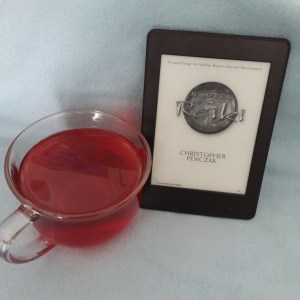
I love a good book and a cup of coffee (or Red Zinger tea as it was when I took the picture)

This past weekend I finished Magick of Reiki: Focused Energy for Healing, Ritual, and Spiritual Development by Christopher Penczak. It is a absolute must-read for Reiki practitioners in America, possibly everywhere else, too.

I originally picked up the book to learn more about the magick piece of it. Full disclosure, I began to study Reiki back in the late 1990s, and was attuned as a Master-practitioner in the Usui style in 2000. Reiki was the topic my Ph.D. thesis in 2011. Reiki is my jam, I use it all the time for myself and my family. For various reasons, it hasn’t been until lately that I’ve started to connect the dots between the Asian culture influences (Taoism, Zen, Meditation, Reiki) and the European cultural influences (Tarot, Magick, aromatherapy, crystals) within my overall energy work.

To put it in a food analogy, I was expecting to try a new dish, but instead got a big old bowl of really delicious and familiar comfort food.

My expectations were backwards. Rather than being a book about a Magickal practice that incorporates Reiki, this is a book about Reiki by a Reiki teacher that points out the ways that Reiki is similar to magick. Instead of a book nudging the limits of my magickal knowledge, I found a book that was, after all, right in my wheelhouse. Delightfully so.

Mr. Penczak’s description of Reiki is right on the mark in my experience. I respect the he way he approaches all the varied schools in Reiki. He deals insightfully and compassionately with some fairly hot button issues between them.

His attitudes toward a wide variety of topics within Reiki very much resonate with my own. His thoughts on extended symbols, individually given symbols, publishing symbols, Reiki guides, the use of intuition within Reiki practice and most of all the giant bugaboos about money and charging for lessons and treatments are all kind, wise and just exactly what the American Reiki landscape needs. For magick topics and learning, I plan to read his other books. Magick of Reiki may not be the best choice for beginner magick reading, but it is perfect for next-step Reiki reading.

This is a book for people who have had a taste of Reiki and are looking for a fuller, more empowered approach to their practice. I cannot recommend it highly enough for anyone who has had any sort of Reiki attunement or training. This is next step elevation of existing Reiki practice through review of the basics and an overview of important advanced concepts.

It seems to me that the best non-fiction writing gives some nugget, some bit of wisdom that transcends its literal topic. The same is true here. Whenever similar ideas come from sources separated in place, time or specialty, it gives that idea a real gravitas. One might shy away from calling anything ultimate ‘truth’ but similar ideas from dissimilar sources makes any notion important to my mind.

Mr. Penczak emphasizes following one’s own intuition and feeling in incorporating different Reiki practices into our own, both generally and session by session as needed. Joanna DeVoe describes herself as a “spiritual magpie” following the same self-direction for her spiritual practices writ large, magick or otherwise. Benebell Wen, in Holistic Tarot, connects the universal life energy (the ‘ki’ in Reiki, the “chi” in Tai Chi) to the ability to do Tarot readings at a distance. Scott Cunningham, in Wicca for the Solitary Practitioner, reminds us that “the feeling is the power.” Adam Savage, writing in Every Tool’s a Hammer hints at the same autonomy and independence of thought within the realm of creativity and making. Mr. Savage captures the core of it when he quotes Ralph Waldo Emerson “To believe your own thought, to believe that what is true for you in your private heart is true for all men – that is genius.”

Genius, as every superhero movies teaches us, can, however, go wrong. To believe your inner heart is genius. To to have an inkling that it can be useful to everyone is generous. To believe that the totality of your path is the one singular right way for everyone is arrogance.

That isn’t to say all singular traditions are arrogant or wrong. The wrongness comes in assuming that one specific tradition is the one true way for everyone be it within Reiki or Magick or making stuff. If there is a particular tradition or path that is right in its totality for you, by all means follow it. You must fo what you know to be right for you be that stick with a particular school or be that follow your inner heart.

There is common ground between the group and the individual.

Tradition is tradition. Method is method. Making your own way is a tradition and a method of its own. Magick of Reiki hints that using the best of what we know gleaned from all the varied schools of Reiki IS the tradition of Reiki just like Cunningham hints that the feeling of power IS the power within magickal practice. This notion seems at diametric odds to adherence to prescribed old ways. Think about trust. Trust runs deeply through both approaches. Trust is the tradition.

In order to follow one particular school of thought within Reiki (or anything else) it require trust of that tradition. It requires trust in the originators and the transmitters of the tradition. If you are on a more inner (read solitary) path, it requires a great deal of trust too….trust in your perceptions and in your ability to adapt as better information comes along. In practice, it is a yin-yang dynamic combination of both. If you follow a tradition, you have to trust your inner knowing to choose the right tradition out of the many that exist. It requires extroidinary trust in your inner heart to change traditions and personal practices if needs be. If you are solitary, you have to trust the outer sources of information that you in turn adopt and adapt.

Usui, Tibetan, Johrei, Karuna, Shamballa; whether you follow one tradition or draw from them all and more, trust is the tradition behind it all.

Other Bookshelf posts:

Sigil Witchery

Bookshelf: Sigil Witchery

witchhatbadthing

I’ve been into Taoist phliosophy since the late 80s, out of the EX-Christian closet since 1992, out of the Tarot closet since the early 2000’s and out of the atheist closet since 2012. I only have one closet left. I don’t rock a goth style in my old-ass middle age but I admit to seeing the world through a witchy lens along with everything else. My “magick” (yeah, I spell it with a K because I think it looks cool and makes an important distinction between philosophy/way of life magick vs stage & entertainment magic.) is a low-key, in the flow, actions-and-words to align my intent with the natural way of things sacred-in-the-mundane variety.

That being said, this worldview is another part of the rebranding from Modern Oracle to TaoCraft. Not all witches are Tarot readers, and not all Tarot readers are witches. The way I see it, to borrow from Bill Maher, if you made a Venn diagram of Tarot, Taoism, Reiki, and my version of witchcraft you’d have damn near a circle. They are different iterations of the same thing. Parallel paths to the same mountain top. Different words to say the same thing. Tarot, Taoism, Reiki and Witchcraft are all just slightly different ways of viewing the world, living in harmony with nature and the natural flow of universal energy.

20190201_093400.jpg

Thus the new “Bookshelf” series of posts. On Modern Oracle, I wrote a few posts singing the praises of a few favorite spirituality and Tarot books. I plan to expand that here, fan-girling over favorite books, old and new, about all of those super-overlapping circles; Magick, Tarot, Reiki, Meditation, Spirituality with assorted other bits of inspiration and entertainment.

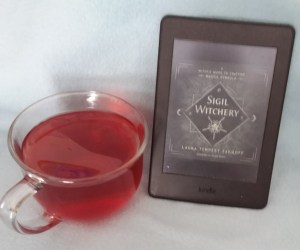
First up in the new series is my latest read, Sigil Witchery by Laura Tempest Zarkoff. Whether you resonate with any form of magick or not, I consider this an essential read for any Tarot enthusiast. The well researched insight into symbolism at it’s most basic level can easily and effectively be brought to bear reading any Tarot or oracle deck. She enriches the most basic shapes and components of images with primal meaning. Those ancient and primal meanings then add another layer of meaning to the artwork on our decks, enriching our reading of the card. In interpreting a card, we can use the assigned meaning for the card blended with our own intuitive understanding of the card, and season it with the underlying significance of the shapes and symbols contained in the artwork as well.

My interest in sigil craft actually began with some of the most potent power symbols -words. Sallie Christensen told me in a reading one time that thoughts are powerful, spoken words more so, but the written word is the most powerful of all.  Sigils are even more potent and focused. Working with written words has one energy, one magic. Working with sigils is a similar but distinctly different energy wavelength.

Sigils are power symbols created from words. There are different methods of creating them, which Zarkoff relates briefly. Then she goes right on to elevate the  whole thing far above what has been before. As an artist, Ms. Zarkoff understands the emotional and subconscious impact of shapes and overall composition. A sigil constructed from the letters of a reduced phrase, or from the lines traced from letters on a magic square are perfectly fine, but the seem to be dominated by straight lines and spiky shapes. With Sigil Witchery, we are given a method for creating sigils that are pleasing to the eye, heart and mind. Better still, her understanding of how to incorporate sigils beyond setting them on fire and releasing them to the ethers makes sense, and, again, elevates the art and craft of sigil drawing.

For Tarot readers, go, read this now. Use what you learn about symbols and art to better appreciate and interpret your cards. If you are interested in sigil making as well, this is the book for you. Sigil Witchery is pleasant to read and easy to understand. Because Sigil Witchery is such an elevation of the art, and because the classic source of sigil craft is so very hard to read and follow (Austin Osman Spare) I suggest reading a mid-step introduction to sigils as a primer before reading Sigil Witchery. (I read Practical Sigil Magic by U.D. Frater. *See note below.) Having that little extra background only helps a reader to appreciate Laura Zarkoff’s accomplishment even more.

Sigil Witchery is available at major outlets like Amazon, Barnes and Noble, and on the author’s website at https://www.lauratempestzakroff.com/shop.html

*Frater’s work is rooted in “Chaos Magic” and some portions of the rituals described might offend some. The first half of the book is an excellent distillation and explanation of Spare’s approach to sigils. The second half of the book delves into ritual magick and, to my way of thinking, an undue, pedantic, overwhelming amount of detail about complicated ritual and so on. If you are inclined toward that style of things, this book is for you. To be honest, I bailed. That kind of detailed complicated ritual just isn’t my path. No slight to Frater, his writing, Spare or Chaos Magick. It’s a good, well written book.  The subject matter isn’t for me after the sigil basics were over.