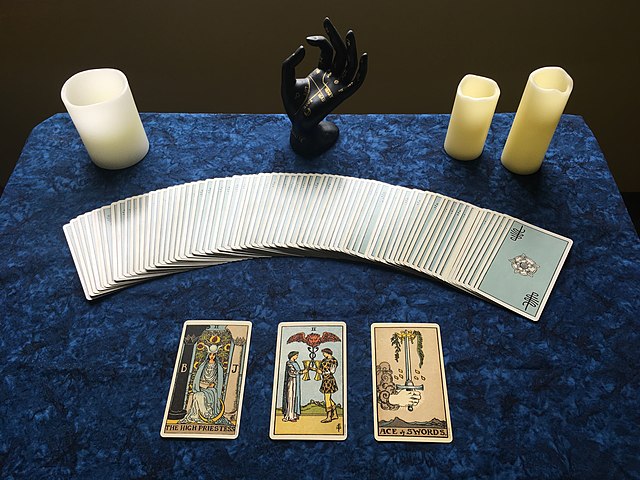
When we talk about the “layout” or “card spread” in Tarot, it literally means how the cards are placed on the table during a reading. The photo above shows a three card layout.
Anything beyond that becomes arbitrary, symbolic and part of the internal intuitive process of doing a reading. In this three card example, the cards could mean past, present and future. It could be read left to right or right to left. It could be a yes-or-no layout (a “no” in this case) Owl and Bones on Instagram once posted a layout where three cards like this could be read as “embrace, face, erase.” The possibilities are endless.
With layouts, the most important thing is the position meanings.
For the layout and reading to be helpful, it is important to have a clear, set idea about what each card position means. If we think of the cards in the picture as a past-present-future reading, before you even shuffle, know for sure which card will mean which thing. Are you reading right to left or left to right? Is the high priestess being read as past or future? Know before you go as they say.
You can write a layout to have as many cards with whatever card position meanings that you like. It is all perfectly fine, as long as you decide before you begin. That decision is a key thing that helps the right message and meaning to come through your reading.
Here are the layouts that I’ve written that I use for my private Tarot readings:
Seasons
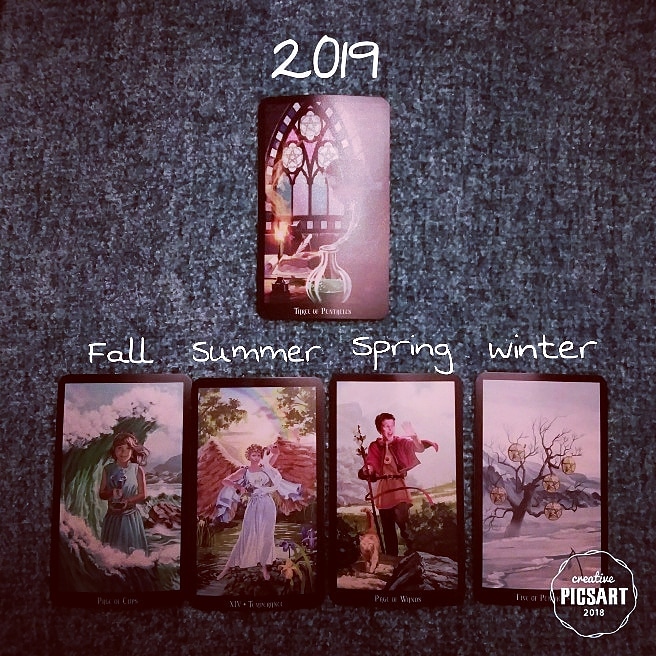
- five cards
- layout intended to give advice about how to best navigate the energy environment for the upcoming year
- four cards for each upcoming season, read left to right in calendar order beginning from the current season when the reading is ordered
- One card above the others to summarize the year as a whole
TaoCraft Path
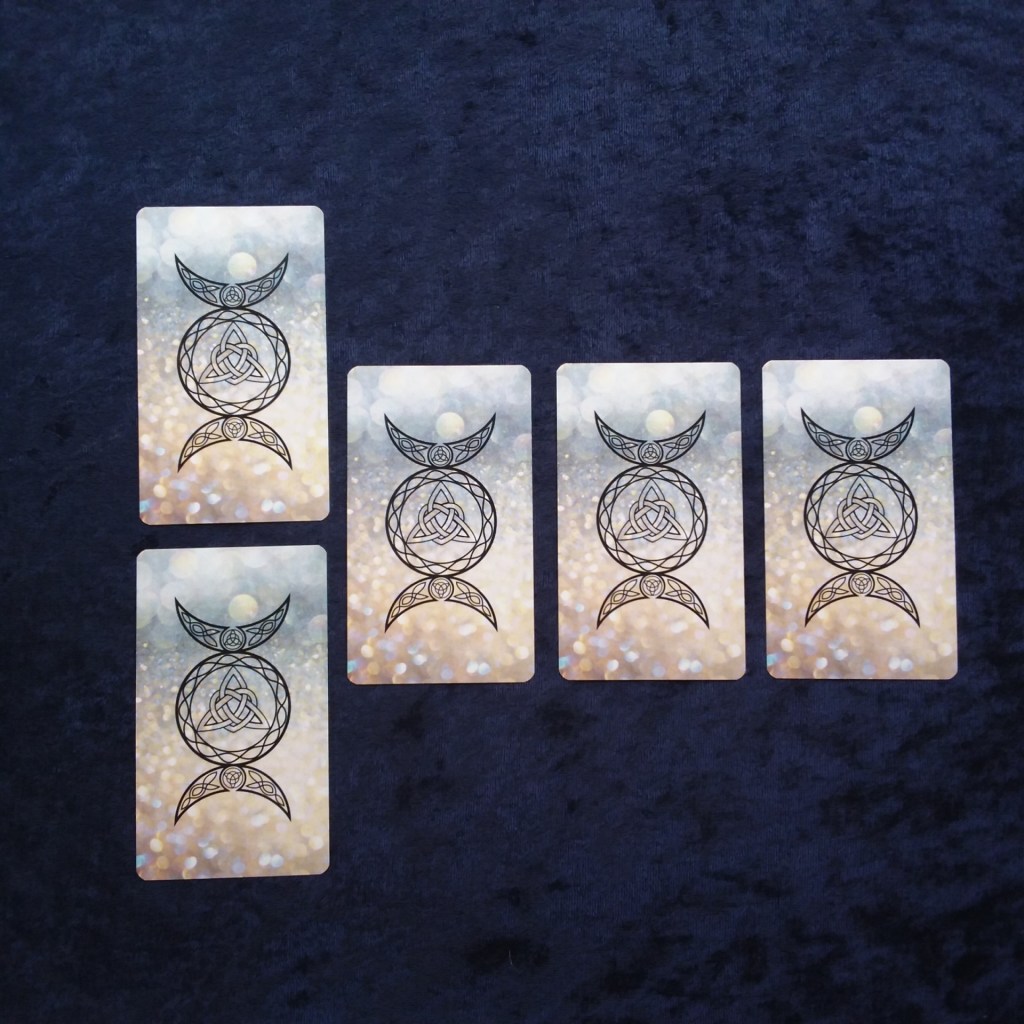
- Five cards
- intended for understanding the current situation and guidance navigating the near-future path at hand
- read right to left: the past’s influence, the current energies, the best way to move forward, the ‘greater path’ (the direction things are headed, the most accessible path forward) and the lesser path (a path forward that is open to choose, but holds more challenges)
Yes / No
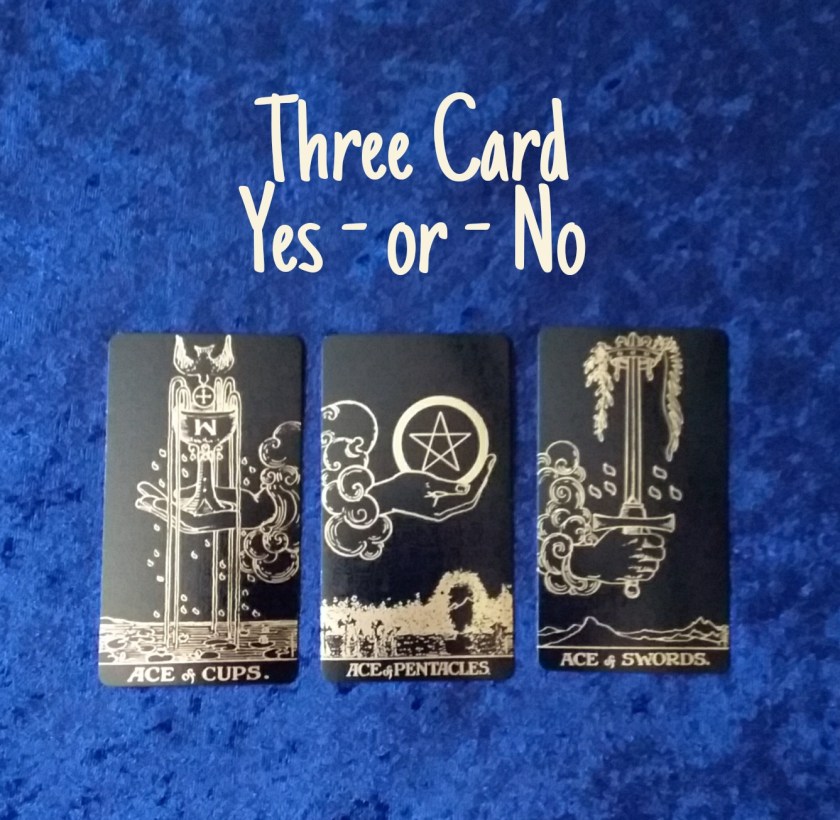
- Three cards
- elaborate shuffling and dealing method to reach the final three cards
- uses all three showing cards to determine a simple yes or no answer
- each of the three cards is then used to give a message relative to the question that was asked
Sage Sip
- One card
- general guidance, daily meditation, or focused follow-up to a larger reading
- Ancient and ubiquitous, no one knows the origins of the one card layout.
Sage Sip members on ko-fi get free one card readings by email (at your request only) up to 3 per calendar month, discounts on the larger layouts, exclusive content and special offers. JOIN HERE.
Image credits: all photos by the author using public domain Waite Smith cards except “seasons” layout image, also photo by the author using Witches Tarot deck by Ellen Dugan and Mark Evans copyright 1996 used with permission Llewellyn publishing

 Sage Sips / TaoCraft Tarot
You must be logged in to post a comment.